
- About
- PEO, PO & PSO
- Academic Programs
- Laboratories
- Contact Us
- Events & Activities
DEPARTMENT OF ARTIFICIAL INTELLIGENCE (AI) AND DATA SCIENCE
The Department of Artificial Intelligence (AI) & Data Science, established in 2024, is committed to advancing education and innovation in the rapidly evolving fields of AI and data science. With an annual intake of 120 students for the B.Tech. program, the department provides a comprehensive curriculum that emphasizes both theoretical foundations and practical applications.
The program focuses on key domains such as Machine Learning, Natural Language Processing, and Computer Vision, empowering students to develop intelligent systems capable of learning from data, understanding human language, and interpreting visual content. In addition, students gain in-depth knowledge of data science methodologies, including Data Mining and Big Data Analytics, essential for deriving insights from complex datasets.
The department emphasis on its modular learning approach, which ensures a balanced integration of classroom instruction with hands-on experience. Students are trained using the latest tools and technologies to solve real-world problems across diverse sectors such as business, healthcare, finance etc.
To foster interdisciplinary learning and broaden the impact of AI education across engineering disciplines, the department also offers multidisciplinary minor programs for students of other engineering branches. These include a track in “Artificial Intelligence” for Computer Science and IT students, covering areas such as Fundamentals of AI, Machine Learning, Statistical Analysis and Data Computing, and AI in Practice, culminating in a capstone project; and another track in “Fundamentals of Artificial Intelligence & Data Science” for students from Civil, Mechanical, and Electronics disciplines, focusing on Python Programming, Data Science Basics, Introduction to AI, and Machine Learning Fundamentals concluding with a capstone project serving as its practical application. These tracks aim to equip students from varied engineering backgrounds with essential AI and data science competencies relevant to their core domains.
To stay aligned with industry trends and academic advancements, faculty members actively participate in short-term training programs, faculty development initiatives, conferences, and workshops conducted by reputed organizations and institutions. Their continuous professional development directly contributes to enriching the student learning experience.
Major Lab Equipment:
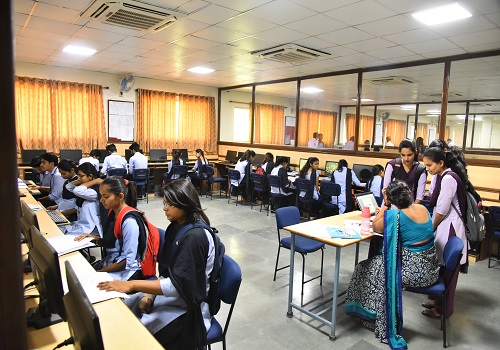
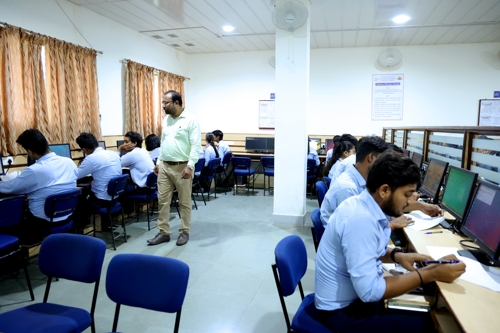
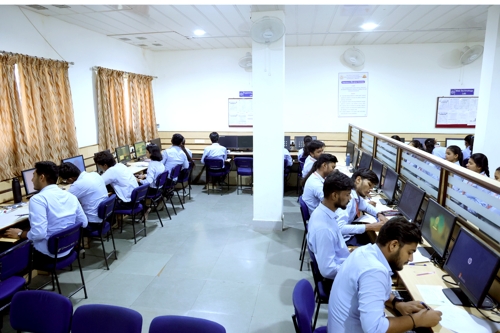
Labs are equipped with recent configuration devices which includes Desktop Systems Core i5, 500 GB HDD, 8 GB RAM, 22” T.F.T., 24 Port Gigabit Switches, Mouse, Keyboards etc.
Accreditation:
The institute holds an ‘A+’ grade accreditation from NAAC and is also recognized by the International Accreditation Organization (IAO), reflecting its commitment to academic excellence and global standards.
• Course: B. Tech
• Year of Inception: 2024
• Sanctioned Intake: 120
• Accredited by: The institute is accredited by NAAC with grade “A+” and International Accreditation Organization (IAO)
• Specialization offered by the department: Artificial Intelligence, Machine Learning, Data Processing, Deep Learning
• Key Laboratories: Machine Learning Lab, Artificial Intelligence Lab, Data Processing Lab, Web Technology Lab, Operating System Lab, Data Structures Lab
• Career Opportunities in : Software and IT Industry, Banking, Finance, E-Commerce, Healthcare and Health Technology, Marketing, Energy, Education Technology, Agriculture, Manufacturing, Construction etc. as a Data Scientist, Business Intelligence (BI) Developer, Research Scientist, Business Analyst, Data Architect, Machine Learning Engineer, Artificial Intelligence (AI) Architect, Artificial Intelligence (AI) Consultant and Product Manager, Computer Vision Engineer, Full Stack Engineer, Neural Network Developer, Natural Language Processing (NLP) Engineer.
Department Vision
To be a leading Program in Artificial Intelligence and Data Science education, fostering innovation and industry relevance to shape skilled and responsible professionals.
Department Mission
- To provide quality education in AI and Data Science through a learner-focused approach.
- To develop analytical thinking, innovation, and hands-on skills through experiential learning and interdisciplinary approaches.
- To integrate emerging technologies and practical skills for solving societal and real-world problems.
- To enhance collaboration with industry and academia while developing ethical, socially responsible, and future-ready lifelong learners.
Curriculum/Syllabus(Autonomy 2024-25 onwards)
- B.Tech Artificial Intelligence(AI) and Data Science Credit Distributed Scheme(NEP)
- B.Tech Artificial Intelligence(AI) and Data Science Scheme of Examination
- B.Tech Artificial Intelligence(AI) and Data Science Syllabus
- Multidisciplinary Minors(MDM) Scheme of Examination and Syllbus (Sem III & IV)offered by Artificial Intelligence(AI) and Data Science Department.
- Honors/Double Minors Scheme Of Examination & Syllabus offered by Artificial Intelligence(AI) and Data Science Department
- Open Electives offered by Institute
- Syllabus for Open Elective
- Board of Study composition Artificial Intelligence and Data Science
- B.Tech Modern Indian Language Marathi Syllabus
- Time Table
- B.TECH. FIRST YEAR FIRST SEM 2026-27 (W-26)…..Click to View
- B.TECH FIRST YEAR SECOND SEM 2026-27 (W-26)…Click to View
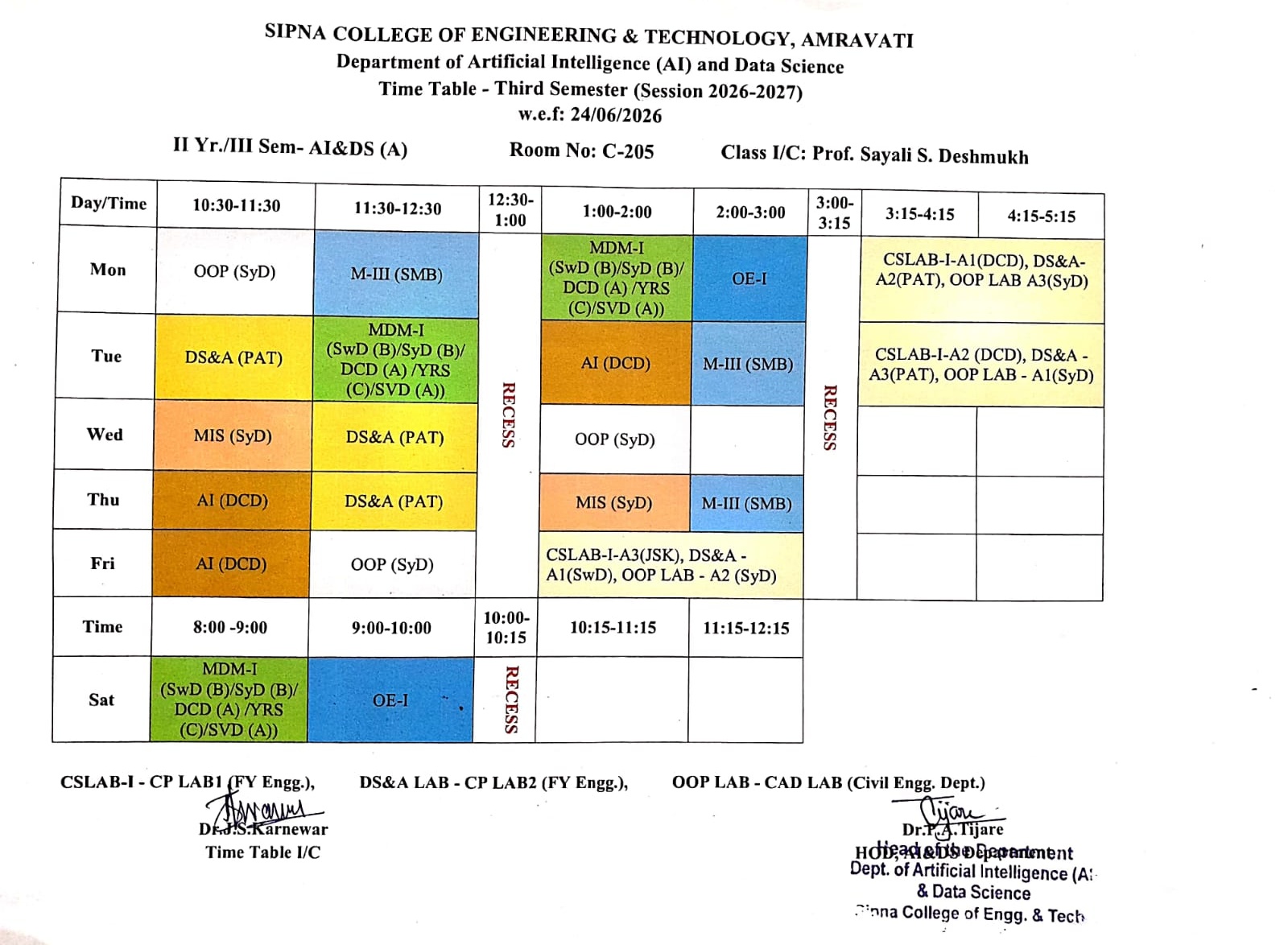
- B.Tech Time Table Second Year( Third Semester) 2026-27.
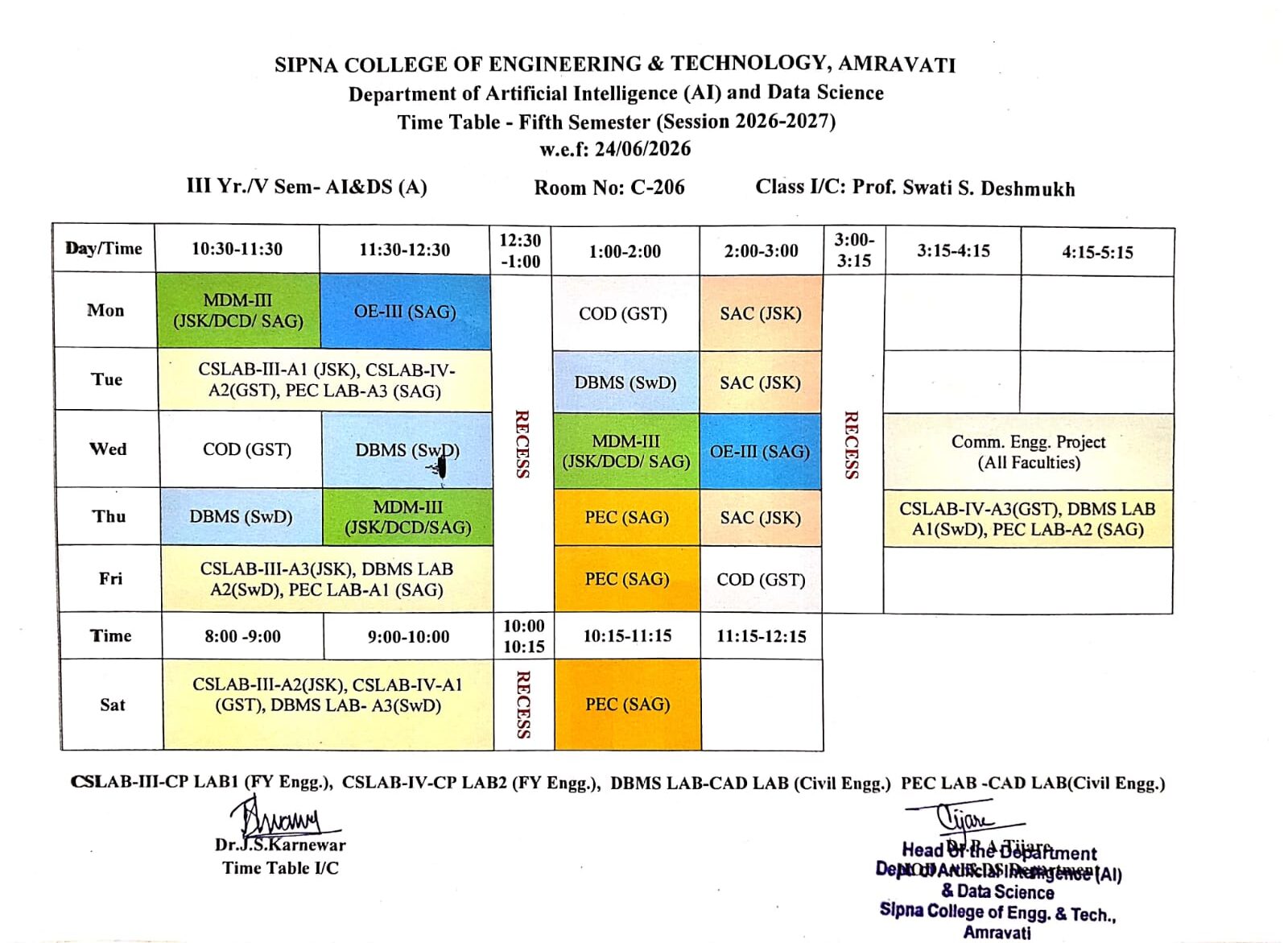
- B.Tech Time Table Third Year( Fifth Semester) 2026-27.
- B.Tech Time Table First Year( First Semester) 2025-26.
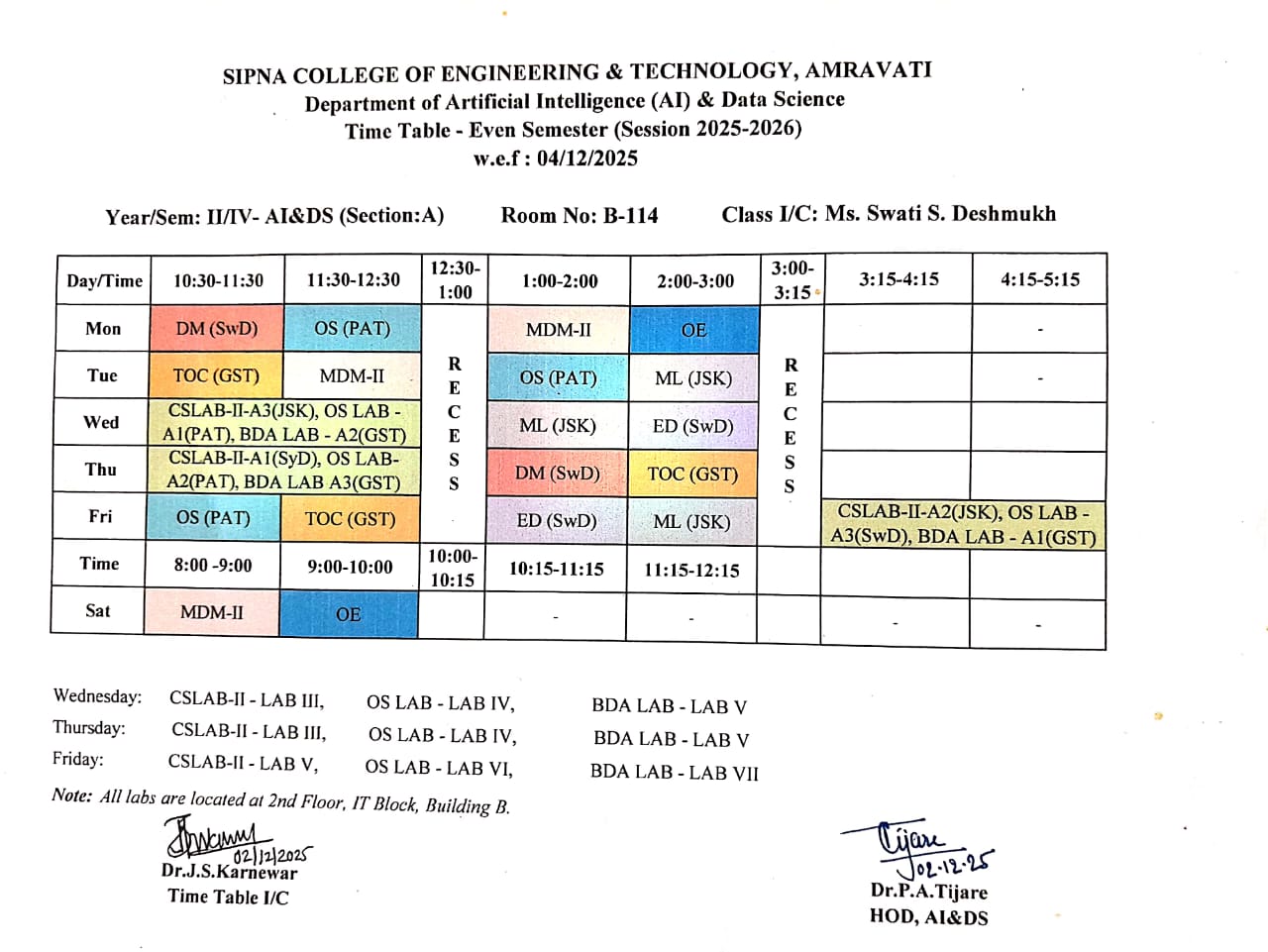
- B.Tech Time Table Second Year(Forth Semester) 2025-26
- B.Tech Time Table Second Year(Third Semester)2025-26
- B.Tech Time Table First Semester (Chemistry Group)2024-25
- B.Tech Time Table Second Semester (Physics Group)2024-25
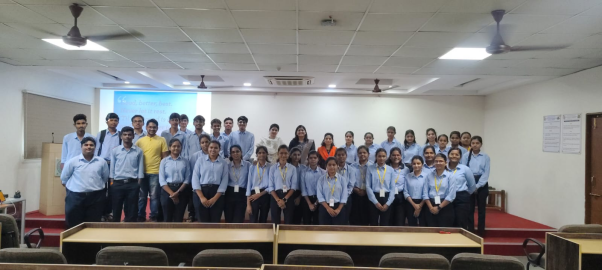
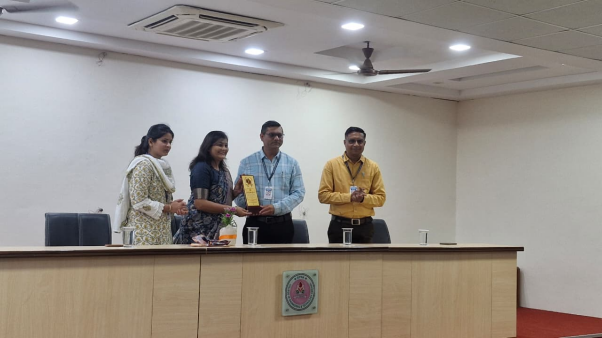
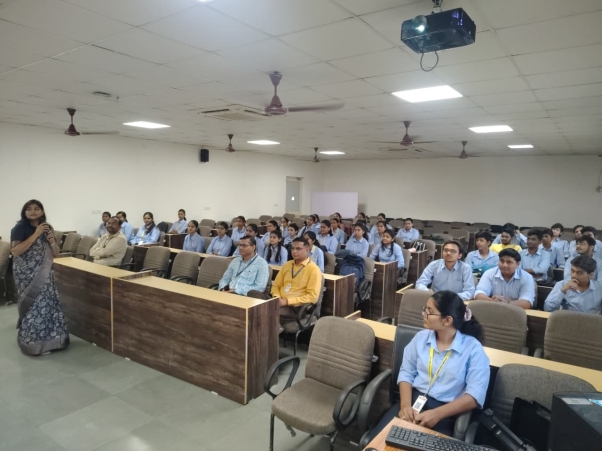
- Session on “How to Become a Full Stack Developer” By Mr. Pruthwiraj Landge Software Engineer, SBI Life Insurance Co. Ltd and Mr. Digambar Waghmare Co-founder, CodeSip Technology for 2nd Year Students on 07/01/2026.The total students participated were 61.
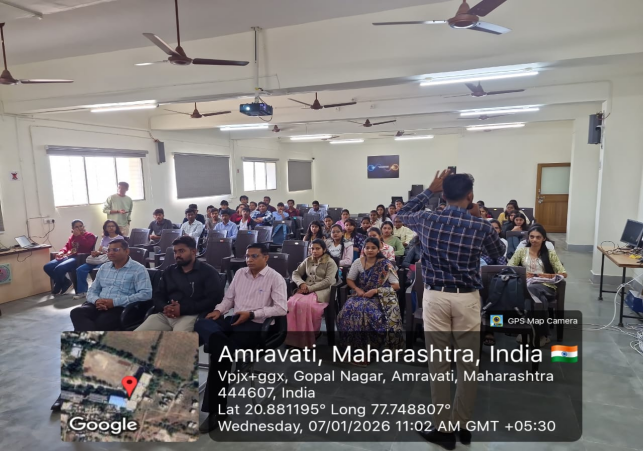
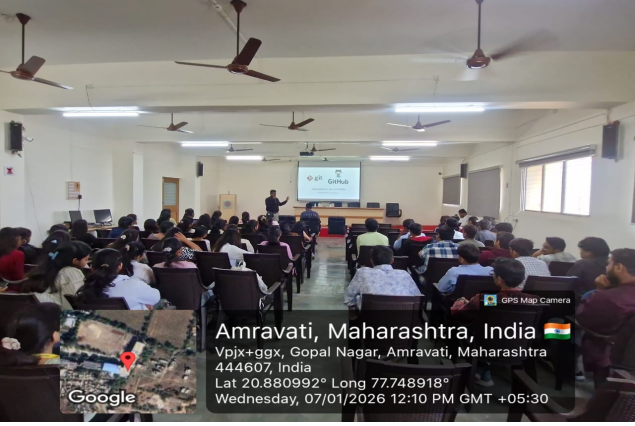
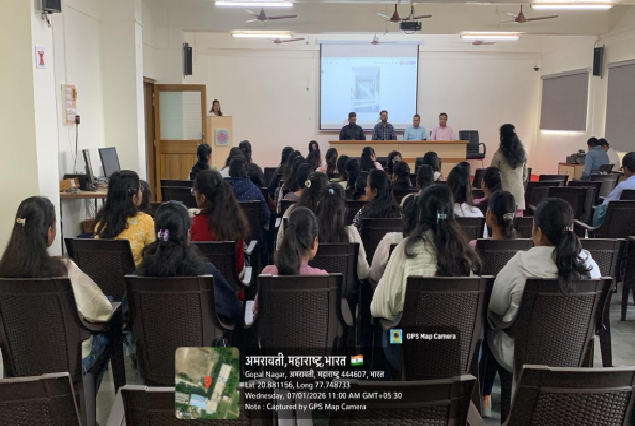
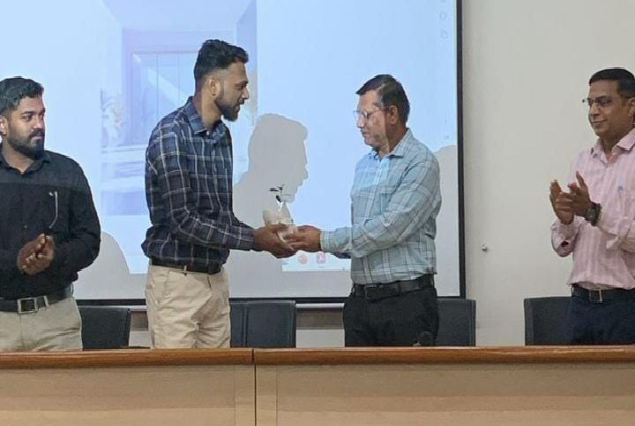
- Session on “Why Gate” By Dr Dinesh Rojatakar G.C.O.E Amravati for 2nd Year Students on 22/12/2025.The number of participants were 44.
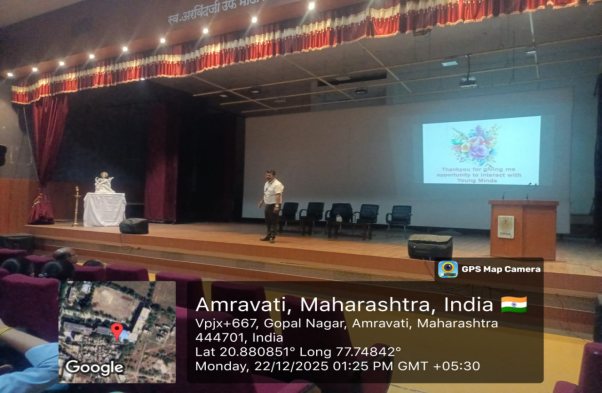
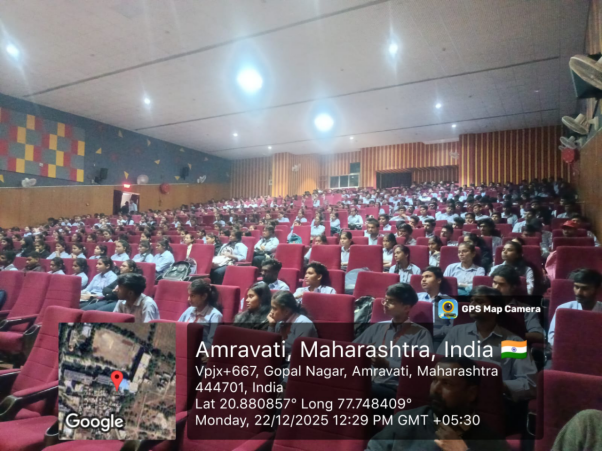
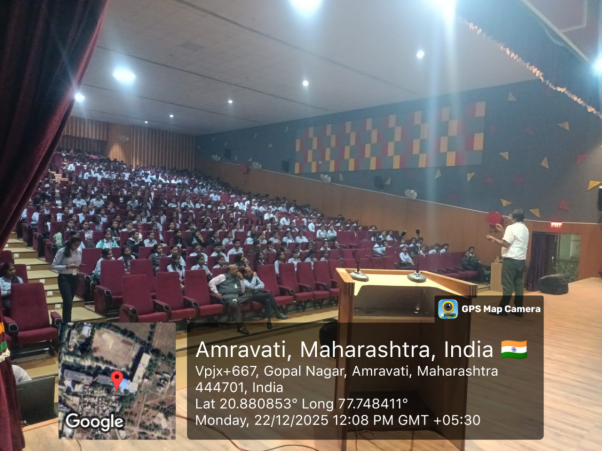
- Session on “Dream Big Start Now: The Power of Early Learning” by Dr. Radhika Deshmukh Soft Skill Trainer, Assistant Professor Dr Panjabrao Deshmukh College of Law for Second Year Students on 25/09/2025.
NEWS LETTERS
Newsletter 2025-26...Click Here
Annexure I: Knowledge and Attitude Profile (WK)
WK1: A systematic, theory-based understanding of the natural sciences applicable to the discipline and awareness of relevant social sciences.
WK2: Conceptually-based mathematics, numerical analysis, data analysis, statistics and formal aspects of computer and information science to support detailed analysis and modelling applicable to the discipline.
WK3: A systematic, theory-based formulation of engineering fundamentals required in the engineering discipline.
WK4: Engineering specialist knowledge that provides theoretical frameworks and bodies of knowledge for the accepted practice areas in the engineering discipline; much is at the forefront of the discipline.
WK5: Knowledge, including efficient resource use, environmental impacts, whole-life cost, re-use of resources, net zero carbon, and similar concepts, that supports engineering design and operations in a practice area.
WK6: Knowledge of engineering practice (technology) in the practice areas in the engineering discipline.
WK7: Knowledge of the role of engineering in society and identified issues in engineering practice in the discipline, such as the professional responsibility of an engineer to public safety and sustainable development.
WK8: Engagement with selected knowledge in the current research literature of the discipline, awareness of the power of critical thinking and creative approaches to evaluate emerging issues.
WK9: Ethics, inclusive behavior and conduct. Knowledge of professional ethics, responsibilities, and norms of engineering practice. Awareness of the need for diversity by reason of ethnicity, gender, age, physical ability etc. with mutual understanding and respect, and of inclusive attitudes.
Programme Outcomes:
Engineering Graduates will able to:
PO1: Engineering Knowledge:
Apply knowledge of mathematics, natural science, computing, engineering fundamentals and an engineering specialization as specified in WK1 to WK4 respectively to develop to the solution of complex engineering problems.
PO2: Problem Analysis:
Identify, formulate, review research literature and analyze complex engineering problems reaching substantiated conclusions with consideration for sustainable development. (WK1 to WK4)
PO3: Design/Development of Solutions:
Design creative solutions for complex engineering problems and design/develop systems/components/processes to meet identified needs with consideration for the public health and safety, whole-life cost, net zero carbon, culture, society and environment as required. (WK5)
PO4: Conduct Investigations of Complex Problems:
Conduct investigations of complex engineering problems using research-based knowledge including design of experiments, modelling, analysis & interpretation of data to provide valid conclusions. (WK8).
PO5: Engineering Tool Usage:
Create, select and apply appropriate techniques, resources and modern engineering & IT tools, including prediction and modelling recognizing their limitations to solve complex engineering problems. (WK2 and WK6)
PO6: The Engineer and The World:
Analyze and evaluate societal and environmental aspects while solving complex engineering problems for its impact on sustainability with reference to economy, health, safety, legal framework, culture and environment. (WK1, WK5, and WK7).
PO7: Ethics:
Apply ethical principles and commit to professional ethics, human values, diversity and inclusion; adhere to national & international laws. (WK9)
PO8: Individual and Collaborative Team work:
Function effectively as an individual, and as a member or leader in diverse/multi-disciplinary teams.
PO9: Communication:
Communicate effectively and inclusively within the engineering community and society at large, such as being able to comprehend and write effective reports and design documentation, make effective presentations considering cultural, language, and learning differences.
PO10: Project Management and Finance:
Apply knowledge and understanding of engineering management principles and economic decision-making and apply these to one’s own work, as a member and leader in a team, and to manage projects and in multidisciplinary environments.
PO11: Life-Long Learning:
Recognize the need for, and have the preparation and ability for i) independent and life-long learning ii) adaptability to new and emerging technologies and iii) critical thinking in the broadest context of technological change. (WK8)
Program Educational Objectives (PEOs):
PEO1: To prepare globally competent graduates having strong fundamentals, domain knowledge, updated with modern technology to provide the effective solutions for engineering problems.
PEO2: To prepare the graduates to work as a committed professional with strong professional ethics and values, sense of responsibilities, understanding of legal, safety, health, societal, cultural and environmental issues.
PEO3: To prepare committed and motivated graduates with research attitude, lifelong learning, investigative approach, and multidisciplinary thinking.
PEO4: To prepare the graduates with managerial and communication skills to work effectively as individual as well as in teams.
Program Specific Outcomes (PSO’s):
1. Students will acquire a foundation in artificial intelligence, machine learning, and data science techniques.
2. Students will be able to design, develop, and implement solutions to real-world problems using Artificial Intelligence & Data Science algorithms.
3. Students will demonstrate skills in applying data analysis, statistical modeling, and visualization tools to extract insights from various datasets.
4. Students will integrate ethical principles and interdisciplinary knowledge to create AI driven
systems that responsibly address societal, environmental, and industrial needs
Under Graduate Programme
U.G. (Artificial Intelligence (AI) and Data Science)
| Sr. No | Course | Intake |
|---|---|---|
| 01 | B.Tech. (Artificial Intelligence (AI) and Data Science) | 60 |
 |  |
Objectives:
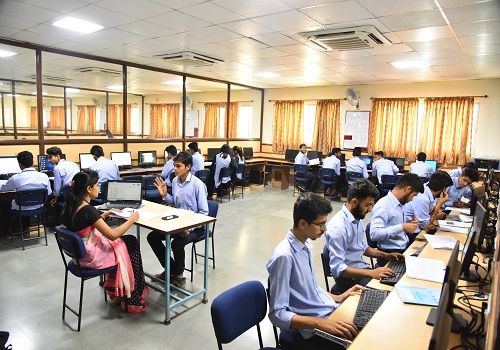
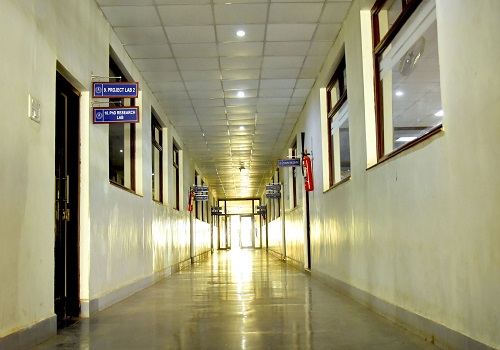
- To provide environment to understand concept and gain knowledge of data structure, algorithm designs, representation of data structure basics with computation logic and their applications.
Facilities:
- HP Desktop Systems(28 Nos) Ci3, 500 GB HDD
- 2 GB RAM, 18.5”T.F.T., AC 3 Ton, AC 2 Ton, 24 Port Gigabytes Switches (2nos)
 | |
Objectives:
- Students will gain practical experience with designing and implementing concepts of operating systems such as system calls, CPU scheduling, process management, memory management, file systems and deadlock handling using C, C++ language in LINUX environment.
Facilities:
- HP Desktop Systems(21 Nos) Ci3, 500 GB HDD
- 2 GB RAM, 18.5”T.F.T., AC 3 Ton, AC 2 Ton, 24 Port Gigabytes Switches
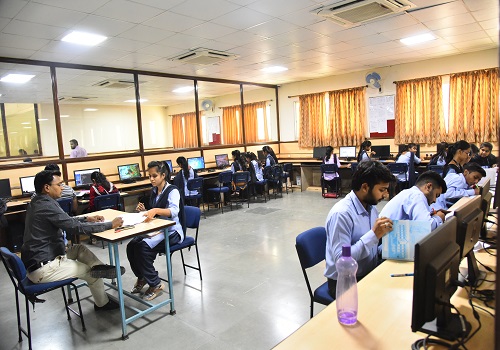
DATA PROCESSING LAB
 |  |
Objectives:
- The purpose of the data processing lab is to teach the students the concepts of data processing paradigm, assimilation of a new programming language, Java, as well as familiarization with specific programming techniques.
Facilities:
- HP Desktop Systems(23 Nos) Ci3, 500 GB HDD
- 2 GB RAM, 18.5”T.F.T., AC 3 Ton, AC 2 Ton, 24 Port Gigabytes Switches (2nos)
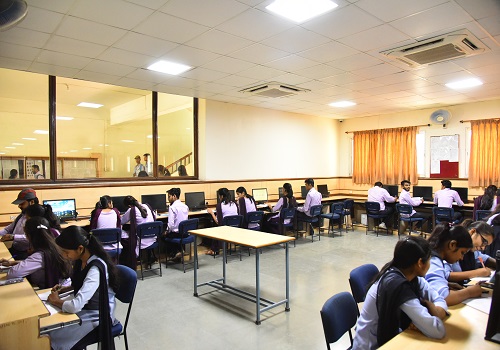 | |
Objectives:
- The lab is designed for conducting practicals based on HTML and C programming language.
- To develop an ability to design and implement static websites.
Facilities:
- HP Desktop Systems(25 Nos) Ci3, 500 GB HDD
- 2 GB RAM, 18.5”T.F.T., AC 3 Ton, AC 2 Ton, 24 Port Gigabytes Switches.
 | 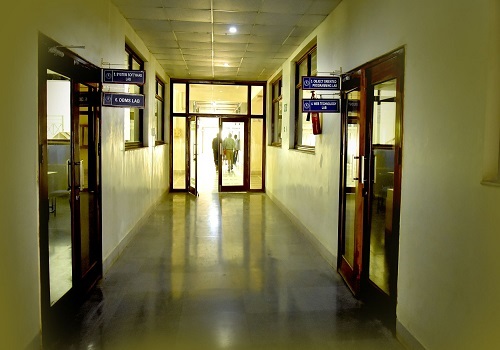 |
Objectives
- To provide environment to gain knowledge of machine learning.
- To develop an ability to design and implement various data optimization techniques in machine learning.
Facilities:
- HP Desktop Systems(25 Nos) Ci3, 500 GB HDD
- 4 GB RAM, 18.5”T.F.T., AC 3 Ton,AC 2 Ton, 24 Port Gigabytes Switches.
 |  |
Objectives
- To have hands on experience of the concepts of AI with the help of various AI examples and tools.
Facilities:
- HP Desktop Systems(24 Nos) Ci3, 500 GB HDD.
- 2 GB RAM, 18.5”T.F.T., AC 3 Ton, AC 2Ton, 24 Port Gigabytes Switches.
- Name: Dr. P. A. Tijare, Head of Artificial Intelligence(AI) and Data Science
- Mobile: 9552048124
- Office Contact No: (0721) 2522342 (Ext.)201
- Email: patijare@sipnaengg.ac.in
SESSION 2026-27
Sr. | Seminar/Webinar Topic | Experts Designation and | No of | Year | Date |
1 | Session on “Start Early, Stand Ahead: Your Roadmap to Career Success” | Prof. Bharat Makhija, Assistant Professor in the Department of Computer Science and Engineering at the Indian Institute of Information Technology (IIIT).
| 47 | For Second Year Students | 8/08/20 26 |
2 | Session on “Blueprint for campus placements” | Prof. Bharat Makhija, Assistant Professor in the Department of Computer Science and Engineering at the Indian Institute of Information Technology (IIIT).
| 45 | For third Year Students | 08/08/20 26 |
SESSION 2025-26
| Sr. | Seminar/Webinar Topic | Experts Designation and Location | No of Students Participated | Year | Date |
| 1 | Session on “How to Become a Full Stack Developer” | By Mr. Pruthwiraj Landge Software Engineer, SBI Life Insurance Co. Ltd and Mr. Digambar Waghmare Co-founder, CodeSip Technology | 61 | For 2nd Year Students | 07/01/2026 |
| 2 | Session on “Why Gate” | By Dr Dinesh Rojatakar G.C.O.E Amravati | 44 | For 2nd Year Students | 22/12/2025 |
| 3 | Session on “Robotics and Future Technologies” |
Mr. Rajat Tajne & Mr. Nupendra Waghmare Robotics Trainer, PHN Technology Pvt. Ltd, Pune.
| 52 | For Second Year Students | 31/07/25 |
| 4 | Session on “Dream Big Start Now: The Power of Early Learning” | Dr. Radhika Deshmukh Soft Skill Trainer, Assistant Professor Dr Panjabrao Deshmukh College of Law | 42 | For Second Year Students | 25/09/2025 |

Latest Posts

GANESHOTSAV 2026
Eco-Friendly Celebration Activities Ganeshotsav 2026 was celebrated at Sipna College of Engineering and…

Heartiest Congratulations! 🏆🎉
It is indeed a moment of immense pride and honour for our entire…
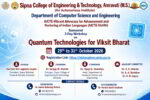
Workshop On Quantum Technologies for Viksit Bharat
AICTE-VAANI Sponsored 3-day Workshop On Quantum Technologies for Viksit Bharat (Hindi) (id:) 2565537652 29th to…